


As organizations explore how to integrate Large Language Models (LLMs) into operations, three primary adoption pathways emerge - each reflecting a different level of control, customization, and technical maturity:
Chat UIs
API Integration
Direct Open-Source Inference.
The choice among them depends on a company’s goals, data sensitivity, and technical capacity.
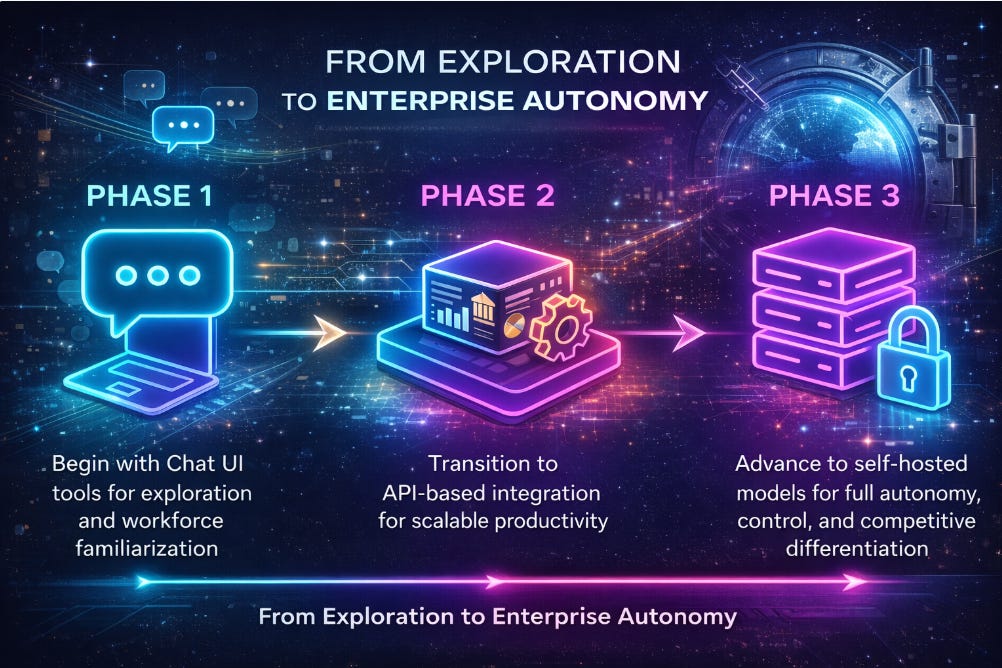
The table below compares the three approaches, their typical use as well as their advantages and limitations:
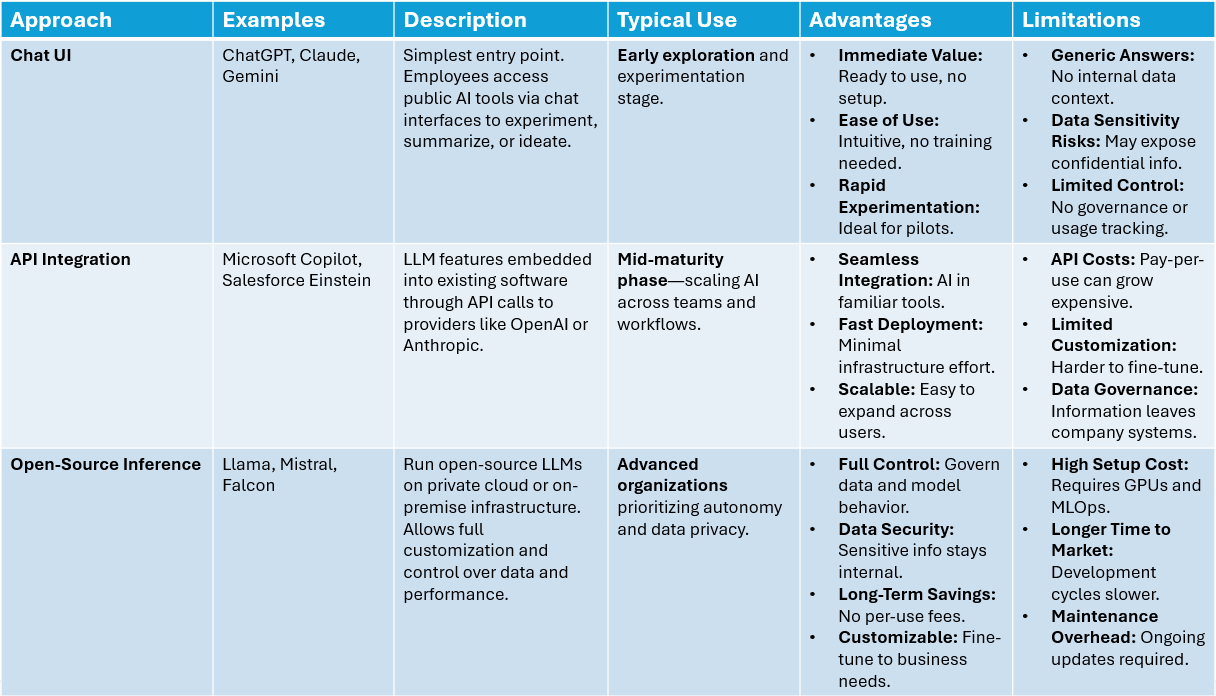
Strategic Insight:These three approaches are not mutually exclusive - they form a maturity curve:
Phase 1: Begin with Chat UI tools for exploration and workforce familiarization.
Phase 2: Transition to API-based integration for scalable productivity.
Phase 3: Advance to self-hosted models for full autonomy, control, and competitive differentiation.
Forward-looking organizations often combine these models - using chat interfaces for brainstorming, APIs for everyday productivity, and open-source models for core proprietary systems - creating a layered AI ecosystem aligned with business priorities.
Top Application Categories of Generative & Agentic AI in the Financial and Banking Industries
1. Customer Engagement & Personalized Financial Experiences
Hyper-personalized insights, recommendations, and financial coaching
Conversational agents that resolve requests end-to-end (disputes, updates, tracing)
Proactive alerts and behavioral nudges based on patterns and goals
Multi-channel experience orchestration (chat, email, app, voice)
Autonomous financial planning (saving, investing, spending optimization)
Context-aware customer sentiment and intent detection
2. Risk Management Automation
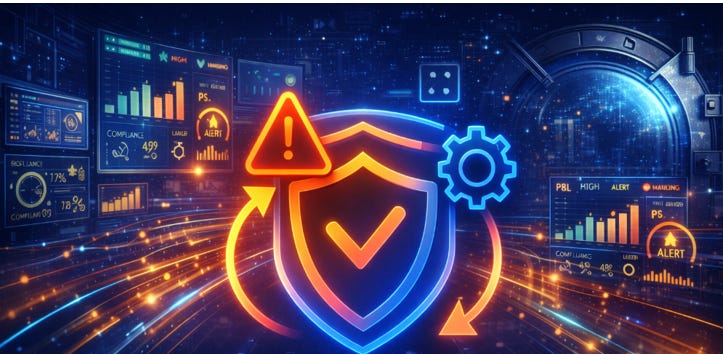
Real-time monitoring of credit, market, liquidity, and operational risks
Multi-step anomaly investigations across multiple systems
Automated regulatory reporting and risk narratives
Continuous policy enforcement and rule validation
Stress-test scenario generation and orchestration
3. Document Processing & Enterprise Knowledge Automation
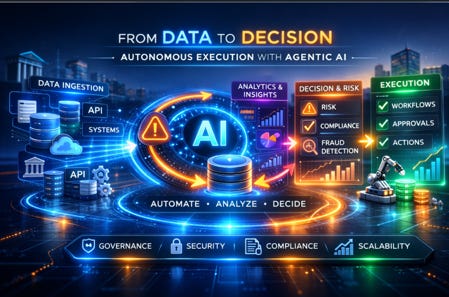
High-accuracy extraction from contracts, statements, invoices, and scanned forms
Summarization of policies, audits, regulatory texts, and legal documents
Autonomous validation, discrepancy checks, and contract comparison
End-to-end ingestion and filing workflows
Knowledge synthesis from unstructured content into dashboards and insights
Smart approval routing driven by context, risk, and document type
4. Communication, Insights & Workforce Productivity

Drafting, refining, and structuring emails, memos, reports, and leadership messages
Autonomous email triage with prioritization, response suggestions, and escalation
Meeting-note summarization with auto-generated action items
Insight extraction from chats, emails, tickets, and documents
Tone transformation for executive, legal, regulatory, or customer-safe language
Agents that turn conversations into tasks, tickets, or workflows
5. Finance, Operations & Controllers Transformation

End-to-end orchestration of close, reconciliations, statements, and reporting
Autonomous variance and root-cause analysis across financial systems
Adaptive forecasting and budgeting with dynamic assumption updating
Automated creation of financial summaries, packs, and executive commentary
Multi-agent coordination for data pulls, calculations, validations, and outputs
Continuous exposure, liquidity, P&L, and capital monitoring
6. Markets, Treasury & Strategic Decision Support
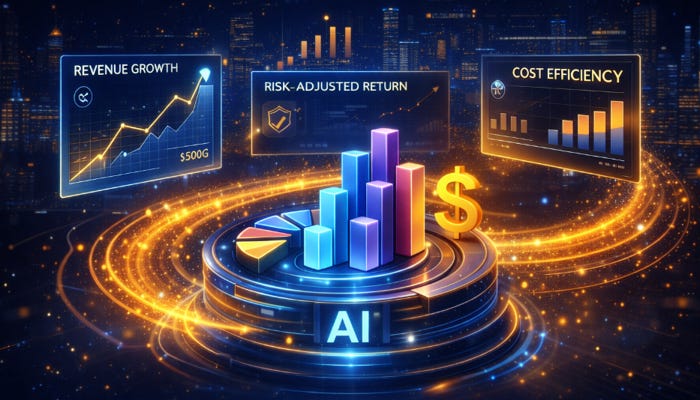
Autonomous market intelligence (news, macro data, filings, sentiment)
Hedging, liquidity, and funding strategy simulation within guardrails
Research assistants generating insights, alternatives, and decision scenarios
Automated portfolio checks, rebalancing, and tax-loss harvesting
Multi-agent strategic scanning for regulatory and competitive signals
Real-time modeling of trade-offs, risks, and future-state scenarios
7. Software Development & IT Modernization
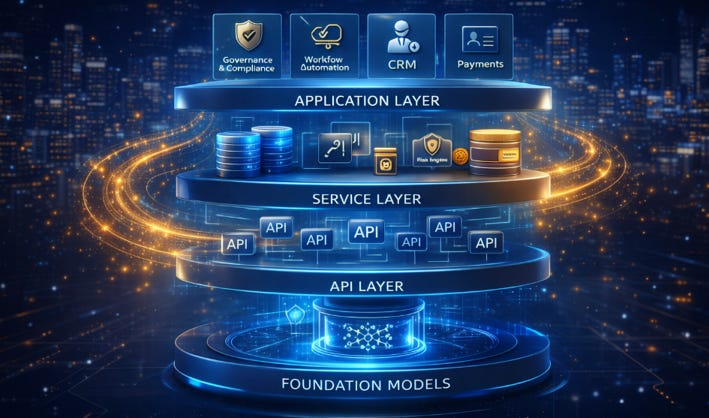
AI-assisted code generation, debugging, refactoring, and documentation
Autonomous DevOps agents (testing, monitoring, deployment, rollback)
IT ticket triage and automated resolution workflows
System health monitoring with predictive failure detection
Dependency, version, and patch analysis done autonomously
Developer copilots for architecture design, API generation, and pattern reuse
8. Project & Program Management Automation
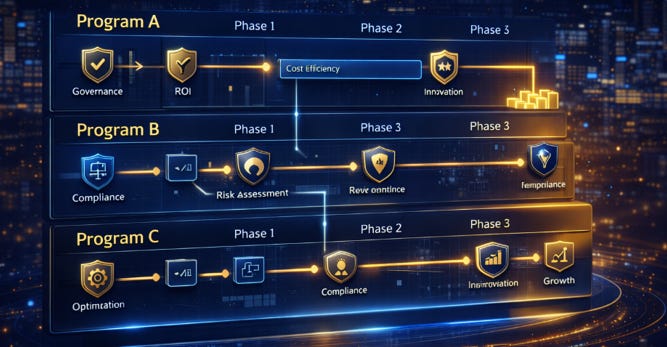
Autonomous tracking of milestones, risks, dependencies, and deliverables
Smart project documentation: status updates, RAID logs, summaries
Agents that gather updates, clarify blockers, and email follow-ups
Forecasting timelines, resource needs, and effort estimates
Automated coordination across teams, calendars, and tasks
Live dashboards updated by multi-agent workflows pulling from multiple systems
9. Operations Excellence & Workflow Execution
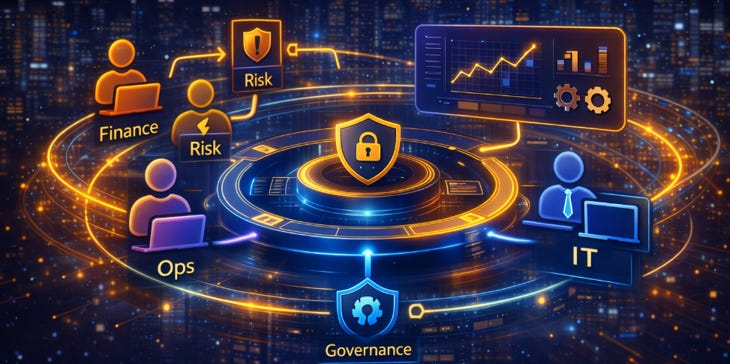
End-to-end orchestration of repetitive operational processes
Autonomous exception handling, investigations, and reconciliation logic
Queue and workload optimization with predictive analytics
Intelligent routing of tasks based on priority, skill, or SLA
Multi-step workflow execution across multiple Ops systems
Operational insights generated from logs, events, and case histories
10. Compliance, Governance & Internal Auditing
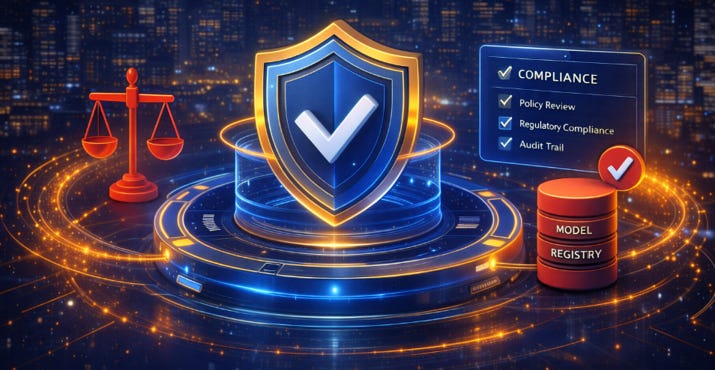
Automated review of transactions, policies, controls, and evidence
Narrative generation for audit reports and compliance summaries
Multi-step compliance workflows (checks, validations, signoffs)
Monitoring for control gaps, violations, and emerging risks
Cross-system evidence gathering and exception documentation
Continuous audit agents running in the background year-round
11. Fraud Detection & Financial Crime Prevention

Behavioral and pattern analysis across accounts, devices, and geographies
Autonomous investigation of suspicious transactions or entities
SAR drafting, case summarization, and escalation automation
Multi-agent chain analysis for money movement patterns
Real-time fraud prevention during digital onboarding or payments
Synthetic fraud scenarios for model strengthening and red teaming
12. Cybersecurity & Threat Intelligence Automation

Autonomous monitoring of networks, endpoints, and logs for threat signals
AI-driven detection of anomalous behavior and insider risk patterns
Automated triage, investigation, and containment workflows (SOAR with agents)
Generative reconstruction of malware behavior, attack paths, and threat summaries
Continuous vulnerability scanning, patch recommendations, and misconfiguration detection
Multi-agent security defense layers that detect, analyze, and respond in real time
Recap of this Article
We explored how Generative and Agentic AI are transforming every major functionacross modern financial institutions - from customer engagement and risk to markets, finance, fraud, and cybersecurity.
We learned the three enterprise adoption pathways - Chat UI, API Integration, and Self-Hosted Open-Source Models -and how these form a maturity curve from experimentation to full autonomy and competitive differentiation.
We understood how Agentic AI orchestrates multi-step workflows, using tools and APIs to execute tasks end-to-end across enterprise systems rather than just generating content.
We reviewed 12 high-impact AI use-case categories, including customer experience, compliance, fraud prevention, cyber defense, IT modernization, PMO orchestration, and Ops execution.
We gained concrete examples of how AI delivers efficiency gains, cost reduction, risk mitigation, improved controls, and new value creation when deployed responsibly and at scale.
Why this Matters
You can now recognize where AI creates real business value, avoiding scattered pilots and focusing on high-leverage workflows.
You can identify which adoption pathway fits their organization’s data sensitivity, regulatory environment, budget, and technical maturity.
You understand how to balance speed, safety, and scalability, ensuring that AI deployments strengthen governance, transparency, and controls.
You can guide teams toward opportunities that offer fast wins while building the foundations for long-term transformation.
With this knowledge, you can articulate a clear enterprise AI roadmap, ensuring alignment across technology, risk, operations, finance, and customer-facing functions.


Explore more: Start Here · Topics · Archive · About